 |
| Image: ISRO |

Showing posts with label ISRO. Show all posts
Showing posts with label ISRO. Show all posts
March 6, 2010
Water Ice on the Moon
September 26, 2009
Water Molecules Discovered on the Moon

Distribution of water-rich minerals around a fresh crater.
Image: ISRO/NASA
The data from three separate spacecrafts have found signs of water molecules on the Moon, more than what has been predicted in the past. In addition hydroxyl (OH, in contrast with H2O, water) has also been found in the lunar soil.
This finding is very surprising because the Moon has long been thought to be a parched and waterless place. Although the moon reaches frigid temperatures in the dark (reaching down to 100K or -173°C), the extreme temperatures in the sunlight were thought to have made the water evaporate completely. The only places immune to this were thought to have been the permanently dark craters at higher latitudes, near the poles of the Moon. However, the new finding suggests that water is much more widespread throughout the Moon.
August 29, 2009
Contact with Chandrayaan-1 Lost

Chandrayaan-1 was India's first mission to the Moon, and included an orbiter and an impactor. The impactor made India only the fourth country to place its flag on the Moon, after the United States, the Soviet Union, and Japan. Chandrayaan-1 has also been a great boost to India's space program, and has provided invaluable information about the Moon. The orbiter completed 312 days in orbit, and in that time, completed more than 3400 orbits around the Moon. The mission has been cut short of the intended two year time period.
Images: ISRO
Astronomy and Space Celebrates International Year of Astronomy 2009.
January 24, 2009
Exploring the Darkest Craters of the Moon
Among the six international payloads onboard Chandrayaan-1, India's first mission to the Moon, was a NASA radar. Called the Mini-RF synthetic aperture radar (SAR), it has sent its first images back to Earth revealing some information about two of the Moon's darkest and coldest craters.
 These two craters are not the craters you can just point to with a telescope and admire. In fact, that will never be possible because these are always hidden from the Earth and never illuminated by the Sun. But the images taken on November 17, 2008 offer the first glimpse of this previously mysterious part of Earth's natural satellite. Since the craters are never lit up, radar is an ideal tool for imaging these craters. In the images taken by the radar, such as the one on the right of Seares crater, the topography of the lunar surface is revealed, with the brighter areas representing parts where the land sticks out towards the Chandrayaan-1 orbiter. The scientists working on this project hope that analysis of this data will help reveal ice deposits in the craters, where the Sun never shines.
As the image below shows, the Mini-RF SAR is really beneficial in learning more about Earth's closest neighbor. It shows what is seen with an observatory on the Earth, and how much priceless information that the radar image adds.

For more information, visit:
Images: NASA
Astronomy and Space celebrates International Year of Astronomy 2009
These two craters are not the craters you can just point to with a telescope and admire. In fact, that will never be possible because these are always hidden from the Earth and never illuminated by the Sun. But the images taken on November 17, 2008 offer the first glimpse of this previously mysterious part of Earth's natural satellite. Since the craters are never lit up, radar is an ideal tool for imaging these craters. In the images taken by the radar, such as the one on the right of Seares crater, the topography of the lunar surface is revealed, with the brighter areas representing parts where the land sticks out towards the Chandrayaan-1 orbiter. The scientists working on this project hope that analysis of this data will help reveal ice deposits in the craters, where the Sun never shines.As the image below shows, the Mini-RF SAR is really beneficial in learning more about Earth's closest neighbor. It shows what is seen with an observatory on the Earth, and how much priceless information that the radar image adds.
For more information, visit:
Images: NASA
Astronomy and Space celebrates International Year of Astronomy 2009
January 18, 2009
2009: International Year of Astronomy
 400 years ago, Galileo Galilei made the first recorded observations of the sky with a telescope. Also in 1609, Johannes Kepler published Astronomia Nova, containing ten years of his work on the fundamental laws of planetary motion. So to celebrate, 2009 has been declared the International Year of Astronomy (IYA209), 400 years after these monumental events in astronomy.
The marking of this has been laid out by the International Astronomical Union, and is also endorsed by the United Nations (specifically UNESCO, United Nations Educational, Scientific and Cultural Organization). The opening ceremony for IYA2009 took place just recently, January 15-16, in Paris, kicking off this great year.
The goal of IYA2009 is to promote astronomy, and science in general worldwide. Astronomy and Space is going to do its part by providing updates about astronomy regularly. Additionally 136 countries are currently participating, with some organizations such as NASA, ESA, and ISRO helping promote the event.
Image: IYA2009
Astronomy and Space celebrates International Year of Astronomy 2009.
November 16, 2008
Images From Chandrayaan-1
ISRO (Indian Space Research Organization) has recently released new pictures from their Chandrayaan-1 spacecraft . Probably the most interesting pictures were the ones from the Moon Impact Probe (MIP) that landed on the Moon on Friday, November 16. The pictures are below, and additional pictures are available on ISRO's website. The first two pictures are from the MIP as it was heading towards the lunar surface. The third picture is from the Terrain Mapping Camera onboard the Chandrayaan-1 spacecraft orbiting the Moon. Click on the images for a larger view.


Images: ISRO
November 14, 2008
Indian Probe Lands on Moon

Image: ISRO
Chandrayaan-1 has touched down on the Moon at 8:31 P.M. (Indian Standard Time, 3:01 P.M. GMT) on Friday, November 14, 2008. The date was deliberately chosen to be Children's Day in India, and also the birthday of India's first prime minister, Jawaharlal Nehru. It landed near the south pole of the Moon.
A few days earlier, the Chandrayaan-1 spacecraft began orbiting the Moon, and released the Moon Impact Probe (MIP), aboard it, once the spacecraft achieved its final 100 km orbit around the Moon. The probe's descent was captured on video by the Chandrayaan-1 spacecraft and the video was transmitted to ISRO's (Indian Space Research Organization) command centre. Four Indian flags were painted on four sides of the probe, and the landing makes India only the fourth nation to have put its flag on the Moon.
The MIP, with a mass of about 34 kg, included three instruments inside: a video imaging system, a radar altimeter, and a mass spectrometer. The video imaging system provided pictures of the Moon as the MIP made its 25 minute journey down to the Moon. The radar altimeter gave the altitude and rate of descent of the lander, and the mass spectrometer studied the lunar atmosphere, which is very thin.
Rockets on the MIP started to fire as the probe approached the Moon, to soften the landing. The mission concluded with a hard landing on the lunar surface which provided a successful ending of one of the most important phases of the Chandrayaan-1 mission.
ISRO's news report.
MIP landing
Animation: ISRO
November 9, 2008
Chandrayaan-1 Passes Into Lunar Orbit
Animation showing the different orbits of Chandrayaan-1.
Animation: ISRO
November 8, marked a very important date for Chandrayaan-1 as it passed into lunar orbit. India has become the fifth country to send a spacecraft to the Moon.
In the days leading up to this maneuver, the spacecraft had gradually been increasing its apogee (the farthest distance from Earth in orbit). Now, Chandrayaan-1 is slowly decreasing its height of the orbit around the Moon, and will finally achieve a polar orbit of 100 km (62 miles) from the surface of the Moon. As it does this, the scientific equipment aboard the spacecraft will be turned on as the spacecraft conducts its normal duties.
November 2, 2008
TMC Onboard Chandrayaan-1 Tested
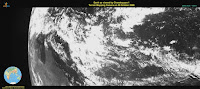
The Terrain Mapping Camera (TMC) is among the numerous tools onboard Chandrayaan-1. Chandrayaan-1 is India's first Moon mission, and the TMC is designed to map the topography of the Moon. Using this camera, Chandrayaan-1 will be able to completely map the surface of the Moon. It was tested on October 29, 2008 by ISRO, and sent back wonderful images of our home planet, Earth. The instrument can take black and white images and has a resolution of 5 meters. The new images are posted below (click for larger view):

Images: ISRO


Images: ISRO
October 25, 2008
Chandrayaan-1: India's First Moon Mission

Chandrayaan-1 launches atop a PSLV-C11. Image: ISRO
On Wednesday, October 22, 2008, the launch of Chandrayaan-1 from Sriharikota in India took place. It started its 8 day journey towards the Moon, and is packed with tools and instruments to help it study our satellite. However the biggest and perhaps the most important news about this spacecraft is that it is India's first Moon Mission, and if the impact probe onboard is successful, India will become the fourth nation to place its flag on the Moon.
The Mission
The Chandrayaan-1 (meaning "Moon Craft" in Sanskrit) mission is developed by India's national space agency, Indian Space Research Organization (ISRO) . Even though it may seem as if humans already understand Earth's closes neighbor well enough, it still holds many secrets. The Moon was a target for exploration in the sixties and seventies, but our interest in it slowly faded away. Now, after more research and a deeper understanding of its past, the Moon has become a destination once again. Plus, it is increasingly becoming a viable stepping stone for exploration of areas deeper in space, such as Mars. India is joining other nations to further explore the Moon.Chandrayaan-1's mission goals are to learn more about the lunar surface and what lies beneath. Through a period of two years, Chandrayaan-1 is supposed to survey the surface and topography and learn about the composition of some areas of the Moon, especially ice in the polar regions, while orbiting the Moon.
Spacecraft
There are numerous payloads onboard Chandrayaan-1. The spacecraft basically consists of an orbiter and an impactor, but there are a total of eleven instruments, five Indian and six foreign. Powering all these instruments is a single solar panel.One of the most interesting of these instruments is the Moon Impact Probe, which itself contains numerous tools to study the surface of the Moon. The impactor also carries with itself a picture of the Indian flag, and if successful, India will become the fourth country to place its flag on the Moon, after the Soviet Union, the United States, and Japan.
Alongside the Indian instruments are the foreign ones, coming from countries such as the United States, Britain, and Germany.
Chandrayaan-2
As the Chandrayaan-1 mission is on its way, ISRO is also planning a second Moon mission, Chandrayaan-2, consisting of a lunar orbiter, a lunar lander, and even a rover. This mission is being developed with the help of the Russian space agency, Roskosmos. The launch for Chandrayaan-2 is currently scheduled for 2012.The Future
Humans are reaching for the Moon again, and India has joined in with its first Moon mission. India's first mission is just a prelude to what it is planning to bring in the future, with a rover under design and maybe even a manned landing. The new Space Race is well underway, and it seems that it is definitely bigger and more international than the last one.April 24, 2007
India Launches Italian Payload

On Monday, the Italian AGILE satellite was launched into space on top of an Indian Polar Satellite Launch Vehicle. This was the first commercial launch that India's space program has ever conducted. Foreign spacecrafts have been launched with this vehicle, but this is the first time someone payed India to launch their cargo. The Italian Space Agency's AGILE will detect high-energy emissions. It carries a gamma ray imager, an X-ray detector, and a mini-calorimeter, which will be used to seek transient, or short, events, like gamma ray bursts. These bursts, usually only lasting a few minutes, are powerful and mysterious explosions scattered all over the universe. It has a wide field of view, examining one-fourth of the sky at a time, which allows the spacecraft to have a better chance to find these rare explosions. The craft is very sensitive to gamma rays, also.
For more information, visit:
Subscribe to:
Posts (Atom)